

How to Create a Cohesive Personal Brand When You Have a Ton of Interests
Being a multi-passionate creative is the best possible thing you can be in 2026.

Coming out of the gate strong: I’m officially declaring 2026 the year of the multi-passionate creative.
For the past decade, the conventional wisdom was clear: pick one thing, talk about only that thing, and never let anyone know you had other interests. The path to a “successful” creative career was to niche down until you could be described in four words or fewer. And a lot of us listened – building brands around a fraction of ourselves, quietly filing away the parts that didn’t fit, then wondering why the content felt hollow and the work felt like performing a version of ourselves that wasn’t quite real.
But in an era where AI can generate a passable blog post or carousel on any topic in thirty seconds, your expertise alone isn’t the differentiator anymore. What can’t be replicated is the specific, irreplaceable combination of things that makes you you. Your taste. Your references. Your personality and your hot takes and the strange overlap between your interest in mid-century typography and your obsession with 19th-century novels and your very strong opinions about the correct ratio of pasta to sauce. That particular cocktail of interests is yours. No one else has it. And increasingly, that’s exactly what audiences are hungry for – something that could only have come from a real, specific, actual human person.
But here’s the thing – we still have brands and businesses and products we’re trying to sell at the end of the day, right? Even if all you think you are is a “content creator” you still have a personal brand, like it or not.
So I’m not saying, you know, post literally everything under the sun that pops into your noggin, but there is a way we can get strategic with our interests and passions in a way that resonates with audiences and makes us feel like we’re not hiding half of ourselves online.
The problem with niching down when you’re a multi-passionate person.
Here’s what actually happens when someone with a lot of interests forces themselves to pick one:
They spend a year building a brand around it. It goes okay. But they’re restless, and the content starts to feel hollow, because they’ve been editing out half of their personality to fit the niche. Eventually they either blow it up entirely, or they quietly let it die, or – worst case – they keep it going on fumes while feeling like a fraud.
I’ve done this myself plenty of times. When I ran my branding studio, I would go back and forth constantly between design styles – I’d feel like I had to be super minimal and luxurious to attract higher-end clients, but then I would miss all the color and retro vibes, so I’d either rebrand over a weekend or start some new side project that would get abandoned two months later.
The friction it caused ended up undoing anything I thought I was doing to build a cohesive brand, because I would change things every six months when it felt misaligned. I’d overcorrect and go too far in the opposite direction with my visuals and messaging and it just ended up being confusing for me and my audience.
Ultimately, the problem wasn’t that I had too many interests – it was that I was thinking about cohesion wrong.
Cohesion isn’t about having fewer things. It’s about having a lens.
Here’s the reframe that changed how I thought about all of this: A cohesive brand doesn’t mean one topic or one style. It means one perspective.
Think about the people whose work you find most compelling — the writers, the creators, the voices that feel like they belong to a whole, recognizable person. They probably cover a lot of ground. But everything they make has a recognizable quality to it. You’d know it was theirs without the byline.
That quality isn’t a niche, per se. It’s a lens, a point of view. A way of looking at the world that runs through everything they do, regardless of the topic.
For some people the lens is their aesthetic. For others it’s a set of values. For others it’s a methodology, or a tone, or a particular argument they keep returning to from different angles.
Finding your connective tissue.
I work with a lot of creative people who feel scattered – not because they’re doing anything wrong, but because they’ve been trying to find coherence at the wrong level.
They look at their interests and see: photography, interior design, slow living, vintage fashion, Italian cooking. And they think: these don’t go together. I’m all over the place.
But here’s what I’d ask instead: What do all of these have in common at the values level? What feeling do they create? If you made a piece of content about any one of them – what would it be about underneath the surface?
Nine times out of ten, the answer isn’t “many random things.” It’s a single sensibility that expresses itself across different territories.
Photography, interior design, slow living, vintage fashion, and Italian cooking might actually be: a deep commitment to craft and physical beauty, a preference for things made with intention, a general rejection of the idea that fast and convenient is the same as good.
What this looks like in practice.
My own version goes something like this:
By trade, I’m a multi-disciplinary designer who specializes in branding, web, and packaging design. I also love interiors and decorating my house, especially with vintage finds. I love books and reading and talking about books. I care a lot about personal style and the aesthetics of everyday life. I am also passionate about helping creative women build careers or businesses without burning themselves out. These look like a lot of different things – design, books, lifestyle, business.
But the thread running through all of it is: design thinking applied to real life. The idea that the same skills you use to design a good brand – pattern recognition, intentional decisions, building systems that actually work for your specific situation – can be used to design a good life.
Once I realized that this was my perspective or point of view, everything got a lot easier. I stopped wanting to be known as that girl who has a really pretty house or that girl who designs a ton of cool CPG brands and started wanting to be known as that girl who is going to help you live a joyful, creatively fulfilling life.
I don’t have to hide away my “off-topic” interests and passions. I just had to find what held them together. Besides, not everything you post should be 100% tied to your offer or business or what you sell. Because that’s boring and repetitive and we’ve established that consumers don’t want to follow brands in 2026 – they’re craving human connection.
Three questions to find your thread.
If you want to do this work yourself, start here:
1. What do all your interests have in common at the values level? Not the topic level – the why level. What are you actually after when you pursue any of them?
2. What feeling do you want someone to have after any interaction with your work? Not what you want them to learn or do – how do you want them to feel? That feeling is often your brand’s emotional core.
3. What’s the one thing only you could say about any of these topics? What’s your angle that’s shaped by your specific combination of experience, aesthetics, and opinions?
Your answers to those three questions are the beginning of your connective thread.
People who are doing this well online.
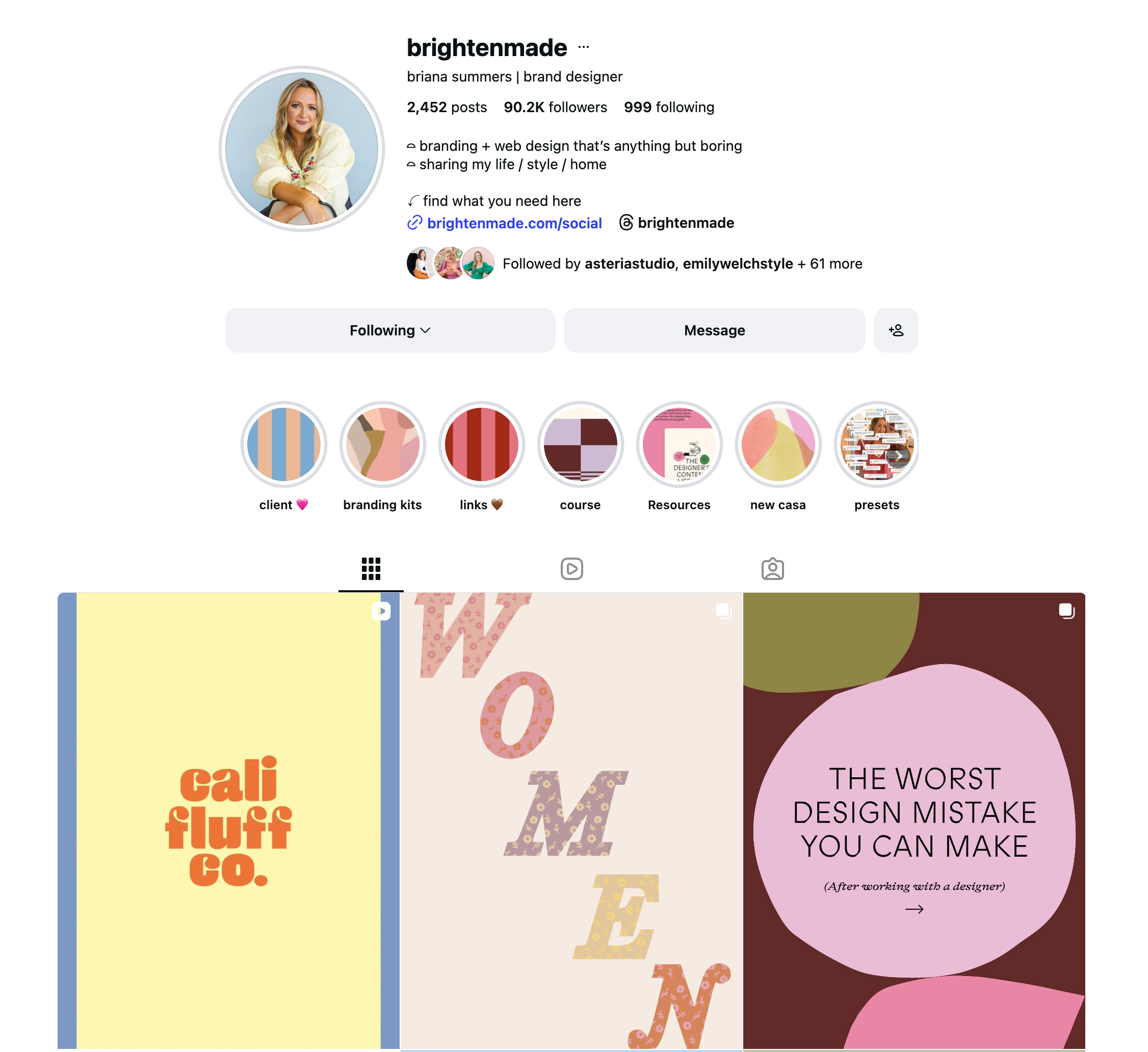
Briana Summers, Brighten Made
What she does: Branding, web, packaging, and graphic design services. (plus courses and education for fellow designers).
What she posts about: Design projects, branding and business tips, home decor, motherhood, travel.
Her connective thread: Her unique visual aesthetic & POV. Her work, as well as her home design & outfits, is all colorful, organic, playful, and fun. You know exactly what you’re going to get, whether it’s a new website design project or a travel guide to Tulum.
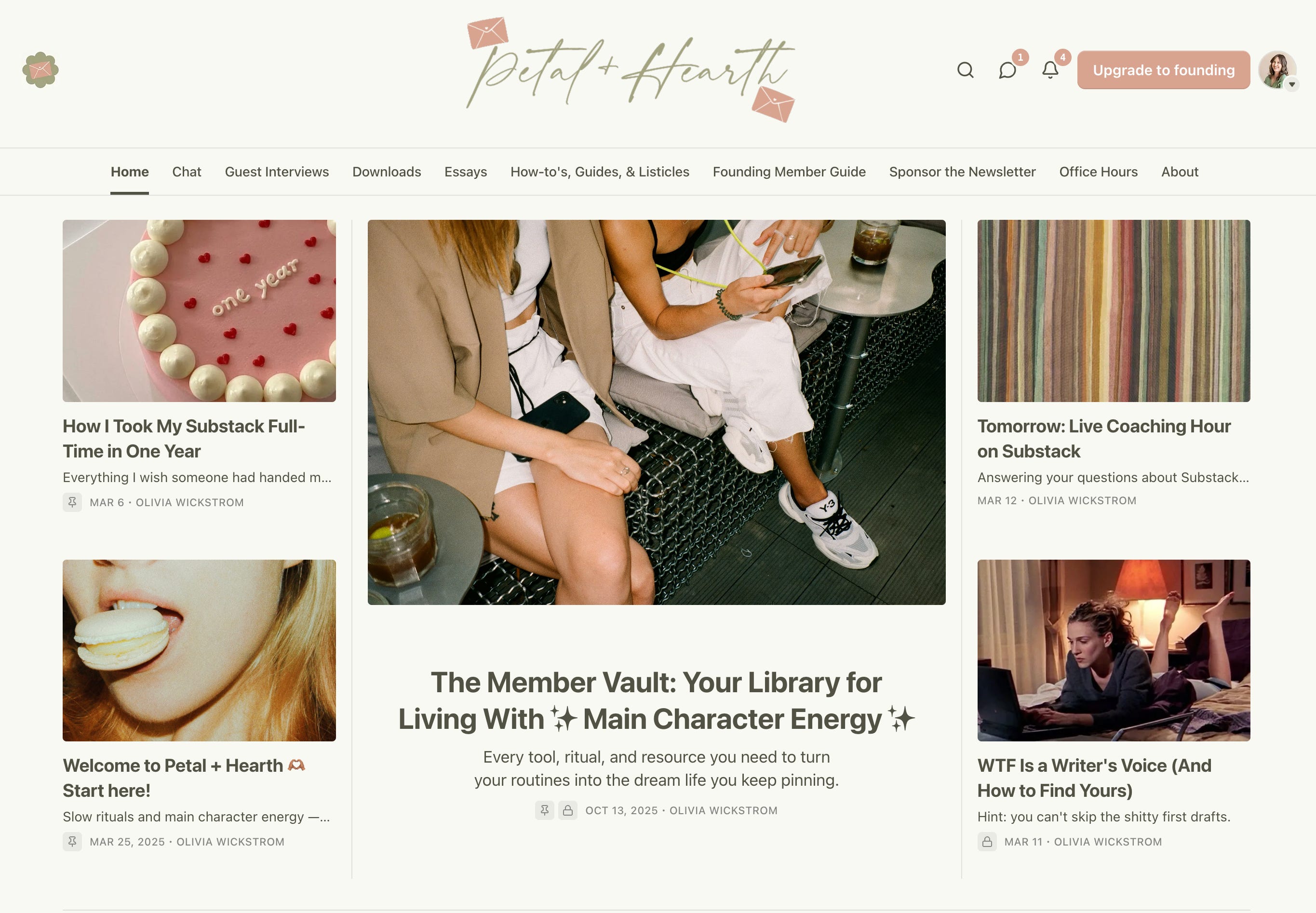
Olivia Wickstrom, Petal + Hearth
What she does: Olivia is a freelancer writer and full-time Substacker.
What she posts about: Growing a Substack, freelancing, living as an American in Paris, creativity, inhabiting your dream life, lifestyle inspo, etc.
Her connective thread: Main character energy. Everything she writes about comes back to the idea of helping her audience take control of their lives and businesses and start acting like the main character in their own stories.
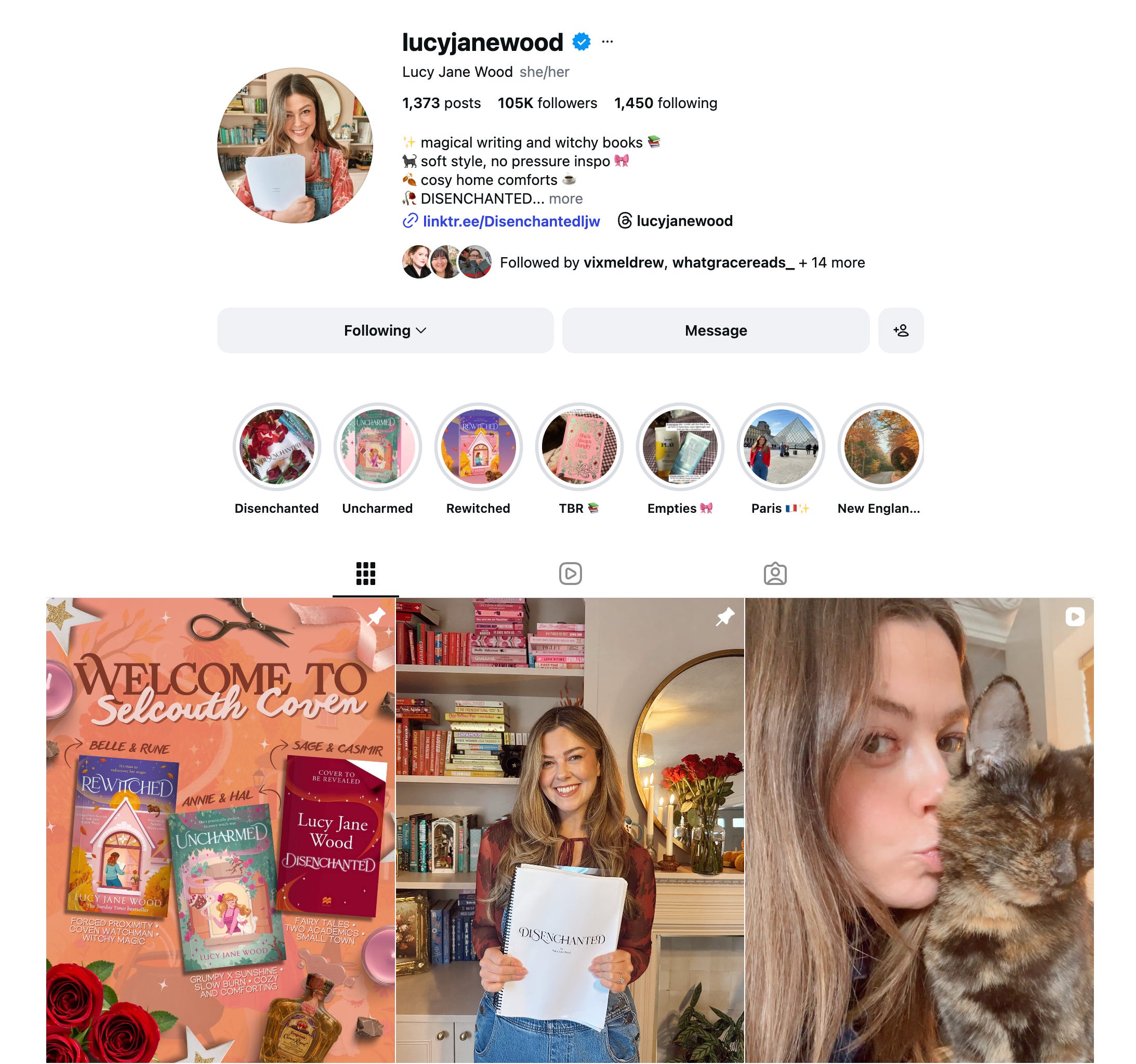
Lucy Jane Wood, Rewitched Author
What she does: She’s an author of cozy witchy rom-com novels.
What she posts about: Writing process and book updates, cozy home and lifestyle inspo, cute outfit posts, and general vibes.
Her connective thread: Coziness, hands down. Watching her outfit videos, you might as well be looking at her novels’ main characters. She embodies the cozy, kinda-witchy vibe of all of her novels (though I will be curious what happens if she ever wants to write other types of books. But she’s doing a-okay as-is).
Want to get even more specific? The Finding Your Connective Thread Workbook is available to paid subscribers in the Resource Library. It walks you through a full interest inventory, a pattern-mining process, and a framework for writing about yourself when you do a lot of things. There’s also a section on auditing your existing content and offers to see whether they’re actually reflecting your real perspective — which is where things get interesting.
If you’re a free subscriber, you can access it by upgrading here. It’s the kind of thing worth doing once and referring back to for years.
Brand Clarity Workbook

Ready to ditch the outdated advice to niche down and finally figure out your secret sauce? This workbook is designed to help you find the perspective, values, and sensibility that holds your work together – not by narrowing down, but by digging deeper.
Parenthetical is a newsletter for creative women who care about what they read, how they live, and what they’re building – without the #girlboss energy. Paid subscribers get access to the full resource library, plus The Well-Designed Life curriculum.
Really appreciate this — exactly what I needed to try and make sense of all the things i like and shaping into a coherent perspective.
I am deeply in the process of finding the connective tissue. Thanks for sharing such helpful info!